ROADGLAS®
Pound for pound | Stronger than steel
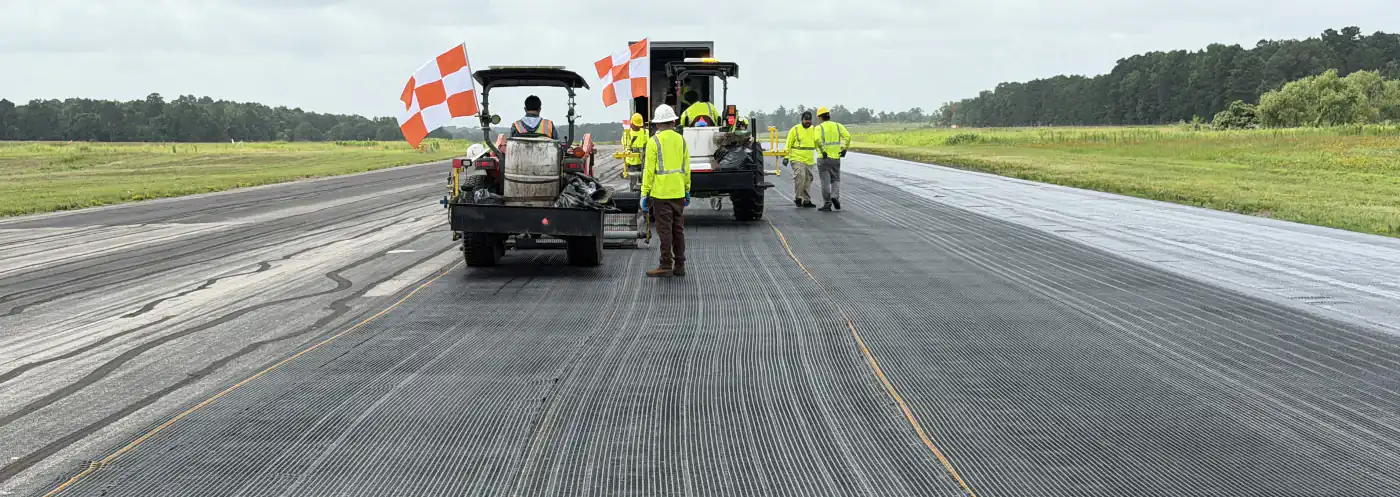
Fiberglass reinforcement with modified elastomeric polymer coating that extends the service life of asphalt two to three times longer.
The grid matrix is composed of fiberglass strands coated with an elastomeric polymer. Fiberglass has high tensile strengths and low elongation properties, which is critical given that asphaltic concrete typically fails at low-strain levels.
Installed between the leveling and surface courses, it redirects vertical crack stresses horizontally to dissipate them. RoadGlas® is to Asphalt what Rebar is to Concrete.
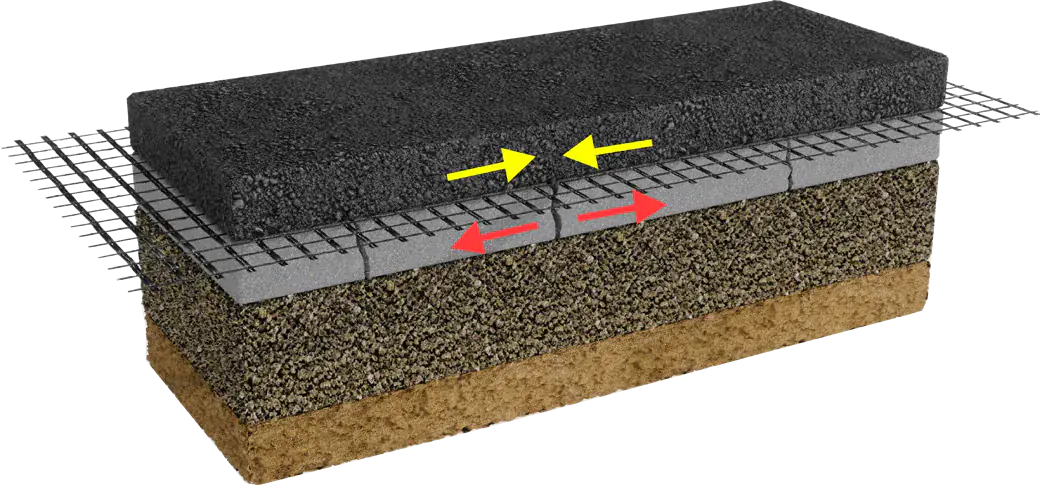
Facilitates through-hole bonding and efficient stress transfer between the overlying and underlying asphalt layers.
Installed quickly without specialized equipment or labor. Pressure-activated adhesive makes it one of the fastest interlayer systems to install.
Reliable performance in diverse environments, from hot desert regions to near-arctic conditions.
Type I (RG100) is placed over the entire width of the roadway. A uniform glass-fiber grid, 100% coated with a synthetic elastomeric polymer and backed with a pressure-sensitive, self-adhesive layer for fast, secure placement. Tested to ASTM D6637.
ROADGLAS® features an advanced elastomeric polymer coating that delivers ultimate defense against structural failure. This specialized formula provides a high-strength, flexible barrier that adapts to environmental stress without cracking.
Specially formulated to melt with the heat of asphalts, promoting increased bond strength between asphalt layers.
Shields vital fiberglass reinforcement strands from damage during the installation process.
Delivers water resistance against moisture infiltration to the sub-base.
Recommended tack coats: UltraFuse Bond Seal and Jebro, Inc. Polymer Modified Asphalt Cement Underseal Membrane. All tack coats: 45 degrees and rising.
Repair potholes and fill cracks more than ¼” wide. Milled pavement requires a leveling course, cured a minimum of 24 hours.
Place self-adhesive grid wrinkle-free with a laydown tractor, overlapping joints 2 in. longitudinal and 6 in. transverse.
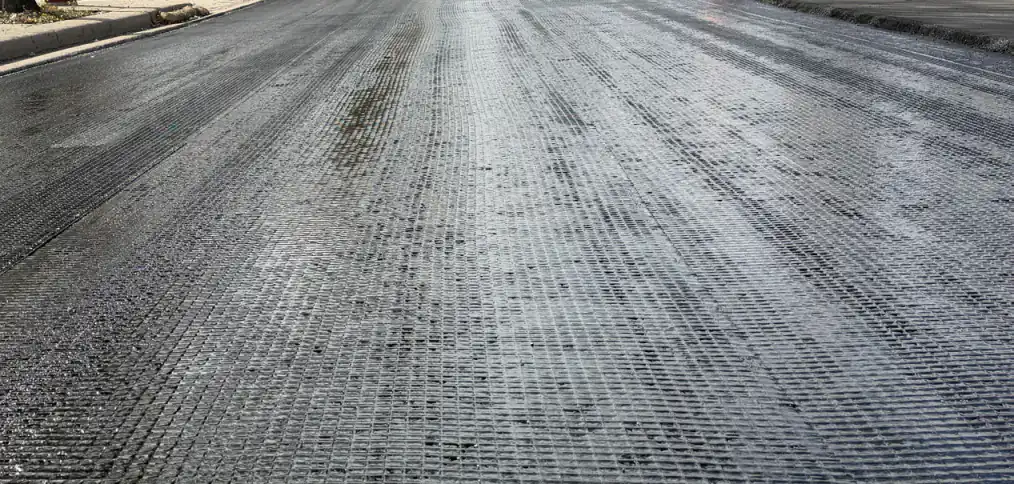
Spray hot-applied trackless tack on top of the grid and roll with a pneumatic rubber tire roller.
Once tack coat has cured, and rolling with pneumatic roller is completed, all construction traffic is permitted. Steel drum rollers are prohibited.
Minimal traffic is allowed; however, product should be covered by asphalt same day to minimize damage to the material.
An Industrial Fabrics, Inc. crew can install up to 3 to 4 miles for ROADGLAS® RG per day. (Average one mile every 2 hours)
It is recommended that asphalt be applied over installed material the same day or within 24 hours of installation.
Cut out as much damaged material as possible. Install new material overlapping 6-8 inches. Retack area with rubber tire roller on the repaired area.
HMA Asphalt overlay must be a minimum of 1.5 inches. TOM Asphalt overlay must be a minimum of 1.0 inches.
Contact us for specifications, pricing and installation support for ROADGLAS® Reinforcement Grid.